Your Cart (0)

Advanced Slot Car Racing Tips and Techniques
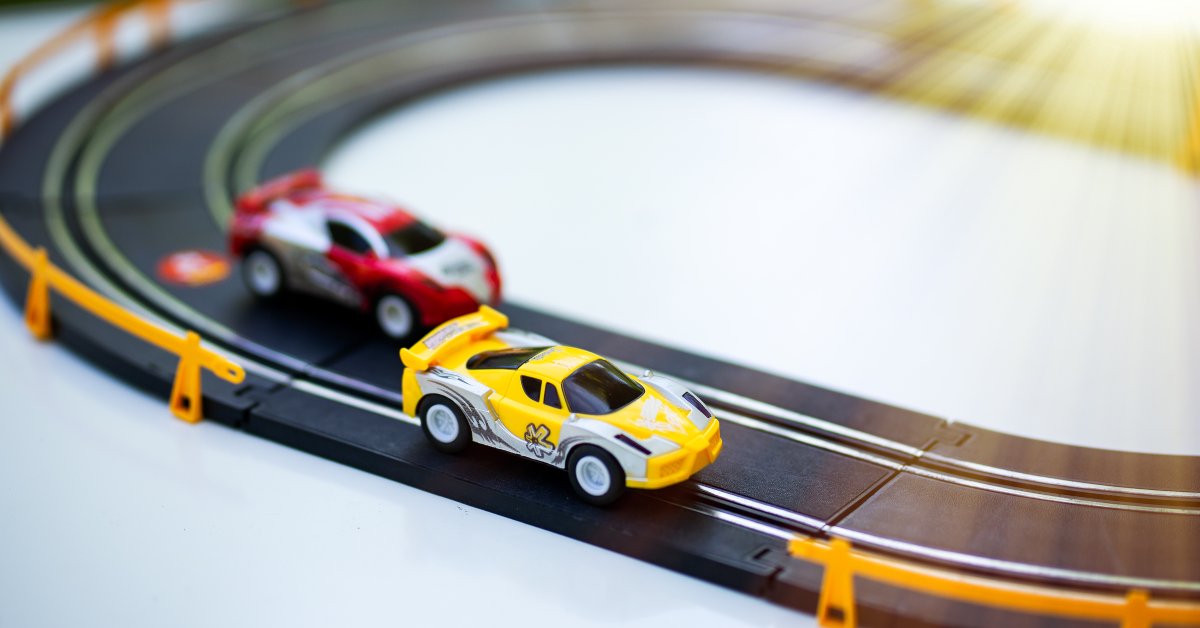
Master advanced slot car racing with expert tips on tuning, track strategy, and driving techniques. Improve your lap times and dominate the competition.
by Theodore Hust • November 11, 2025
Slot car racing captivates enthusiasts with its blend of speed, precision, and technical skill. What begins as a simple hobby can quickly evolve into a passion that demands advanced knowledge and refined techniques. As you progress beyond casual racing, understanding the nuances of your equipment and developing sophisticated driving skills becomes essential for competitive success.
This post explores advanced slot car racing tips and techniques. From fine-tuning your car’s mechanical components to mastering complex track configurations, these techniques will help you shave precious seconds off your lap times and dominate the competition.
Understanding Your Slot Car’s Components
Success in slot car racing starts with a thorough understanding of your car’s mechanical systems.
Motor
The motor serves as the heart of your machine, converting electrical energy into rotational force. Modern slot car motors vary significantly in design, with some optimized for torque and others for top-end speed. Recognizing which motor type suits your racing style and track conditions gives you a competitive advantage.
Tires
Tires play a critical role in transferring power to the track surface. Tire compound, tread pattern, and contact patch size all influence grip levels and handling characteristics. Softer compounds provide superior traction but wear more quickly, while harder compounds sacrifice some grip for improved longevity. Experimenting with different tire combinations helps you find the optimal balance for specific track conditions.
Gears
Gears determine how your motor’s power translates into wheel speed. A higher gear ratio delivers greater acceleration but limits top speed, while a lower ratio produces the opposite effect. Selecting the appropriate gearing requires careful consideration of track layout, particularly the length of straightaways and the tightness of corners.

Tuning for Speed and Performance
Weight distribution fundamentally affects how your slot car handles through corners and accelerates down straightaways. Moving the weight forward improves front-end grip, helping your car navigate tight turns with confidence. Conversely, rearward weight bias can enhance acceleration by increasing traction at the drive wheels. Many competitive racers adjust weight distribution by repositioning the motor or adding strategic ballast to achieve optimal balance.
Motor upgrades offer significant performance gains for serious competitors. High-performance motors feature improved magnets, precision-wound armatures, and advanced bearing systems that reduce friction and increase power output. When upgrading your motor, pay attention to technical specifications such as RPM ratings and amperage draw to match the motor’s characteristics to your racing objectives.
Magnet strength directly influences downforce and cornering speed. Stronger magnets create greater magnetic attraction between your car and the track’s steel rails, allowing higher cornering speeds. However, excessive magnetic downforce can slow acceleration and reduce top speed on straightaways. Finding the right magnetic balance often requires testing different magnet positions or strengths to match your driving style and track configuration.
Track Mastery Through Strategic Analysis
Banked turns demand a different approach than flat corners. The banking angle allows higher entry speeds, but you must position your car correctly to maximize the turn’s geometry. Entering too high on a banked turn can cause your car to climb the banking and lose speed, while entering too low wastes the banking’s speed advantage. Practice finding the optimal line that uses the banking’s full potential without sacrificing momentum.
Chicanes challenge even experienced racers with their rapid directional changes. These technical sections require precise throttle control and smooth steering inputs. Aggressive driving through chicanes typically results in deslotting or significant speed loss. The key lies in maintaining rhythm and flowing through each transition with controlled aggression rather than brute force.
Elevation changes introduce additional complexity to track mastery. Uphill sections demand power management to maintain speed against gravity’s pull, while downhill runs require careful throttle modulation to prevent your car from flying off the track. Anticipating these elevation transitions and adjusting your approach accordingly separates advanced racers from beginners.
Advanced Driving Techniques
Drifting at scale can actually help you navigate certain corners more quickly. When executed properly, a controlled drift allows you to carry more speed through sweeping turns by using all available track width. The technique involves entering the turn at a slightly higher speed than normal, then using controlled throttle application to maintain a balanced drift angle throughout the corner. This advanced skill requires extensive practice to master, but delivers impressive lap-time improvements once perfected.
Braking in slot car racing differs from full-scale motorsports because you control it entirely through throttle release. The moment you lift off the throttle, electrical resistance from the motor creates a braking effect. Skilled racers use this engine braking to their advantage by modulating throttle inputs to scrub speed precisely before corners. Learning to trail brake—gradually releasing the throttle as you enter a turn—allows for later braking points and higher corner entry speeds.
Throttle control separates competitive racers from casual enthusiasts. Smooth, progressive throttle application prevents wheel spin and maintains optimal traction throughout each corner. Many advanced racers develop a feel for their car’s traction limits, applying just enough throttle to keep the tires at the edge of adhesion without breaking loose. This delicate balance maximizes acceleration while maintaining control.

Maintaining Peak Performance
Regular cleaning keeps your slot car performing at its best. Dust, dirt, and rubber debris accumulate on electrical contacts, wheels, and gears, gradually degrading performance.
Lubrication requires careful attention to detail. Apply lightweight oil to axle bearings and gear meshes, but avoid over-lubricating, which attracts dust and creates resistance. Many competitive racers use precision applicators to place tiny amounts of lubricant exactly where needed. The armature shaft bearings in your motor particularly benefit from regular, light lubrication with specialized motor oil.
Tire maintenance directly impacts grip and handling consistency. Clean your tires regularly with tire cleaner or mild soap to remove buildup that reduces traction. Some racers true their tires on a specialized truing machine to maintain perfectly round contact patches, which improves stability and cornering performance. For 1/24th scale slot cars, which often compete on exceptionally smooth tracks, tire truing can provide measurable performance advantages.
Electrical system inspection prevents frustrating mid-race failures. Check your car’s wiring for frayed insulation or loose connections that could cause intermittent power loss. Inspect pickup shoes for wear and replace them when they become thin or damaged. These preventive measures keep your car running reliably during crucial races.
Taking Your Racing to the Next Level
Advancing your slot car racing skills requires dedication to continuous improvement and attention to technical details. The techniques covered here—from mechanical tuning to advanced driving skills—form the foundation of competitive racing success. Each element works together to create a complete racing package that performs consistently at high levels.
Apply these strategies systematically, testing each modification and technique to understand its impact on your performance. Keep detailed notes about setup changes and their effects, building a knowledge base that accelerates your development as a racer. Join local racing clubs or online communities where experienced racers share insights and racing strategies that complement the technical knowledge you’ve gained here.
The path to mastery demands patience and persistent practice, but the rewards of improved performance and competitive success make the journey worthwhile. Start implementing these advanced tips today, and watch your lap times drop as your skills reach new heights.
At Carrera, we offer high-quality 1/24th scale slot cars that every enthusiast will appreciate. Take a look at our collection to find the car that’s perfect for you. You’ll be ready to race in no time!