Your Cart (0)

Creative Slot Car Layouts for Limited Space
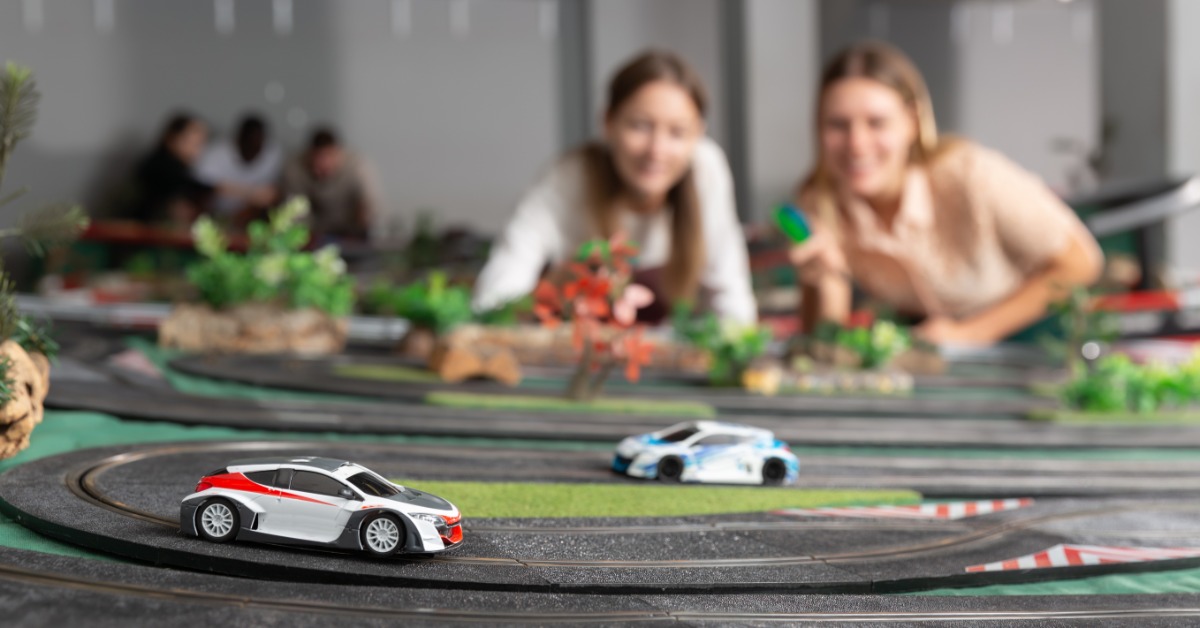
Explore creative slot car layouts for limited space. Learn compact track design ideas, space-saving layouts, elevation tips, and racing solutions for any room.
by Theodore Hust • July 20, 2026
Many slot car enthusiasts face the same challenge: finding enough room to build an exciting track layout. Dedicated hobby rooms remain a luxury for most people, especially when a layout must share space with a family room, basement, office, or garage. Fortunately, limited space does not mean limited creativity.
Modern slot car systems allow hobbyists to create engaging race experiences in surprisingly small areas. Smart design choices, careful planning, and creative use of available space can transform even a modest footprint into a layout that delivers hours of enjoyment.
Whether you race Carrera slot cars, 1/32 Scalextric slot cars, or other popular systems, thoughtful design helps maximize every square foot.
Why Space Efficiency Matters in Slot Car Racing
A well-designed compact layout offers several advantages. Smaller tracks often cost less to build, require fewer accessories, and make maintenance easier. Drivers can also reach every section of the track without stretching or walking around large layouts.
Many hobbyists discover that a compact design encourages more strategic racing. Tight corners, technical sections, and carefully placed lane changes often create more competitive races than large, sprawling circuits.
The goal is not simply fitting a track into a small area. The goal is creating an engaging racing experience that feels larger than the available footprint.
Start With Accurate Measurements
Before connecting the first track section, measure the available space carefully.
Consider:
- Room dimensions
- Furniture placement
- Walking paths
- Electrical outlets
- Storage access
- Ceiling height for elevated sections
A detailed floor plan helps prevent costly design mistakes. Many enthusiasts sketch layouts on graph paper or use digital track planning software before purchasing additional pieces.
Accurate measurements help ensure every track section serves a purpose.
Create a Compact Oval With Technical Features
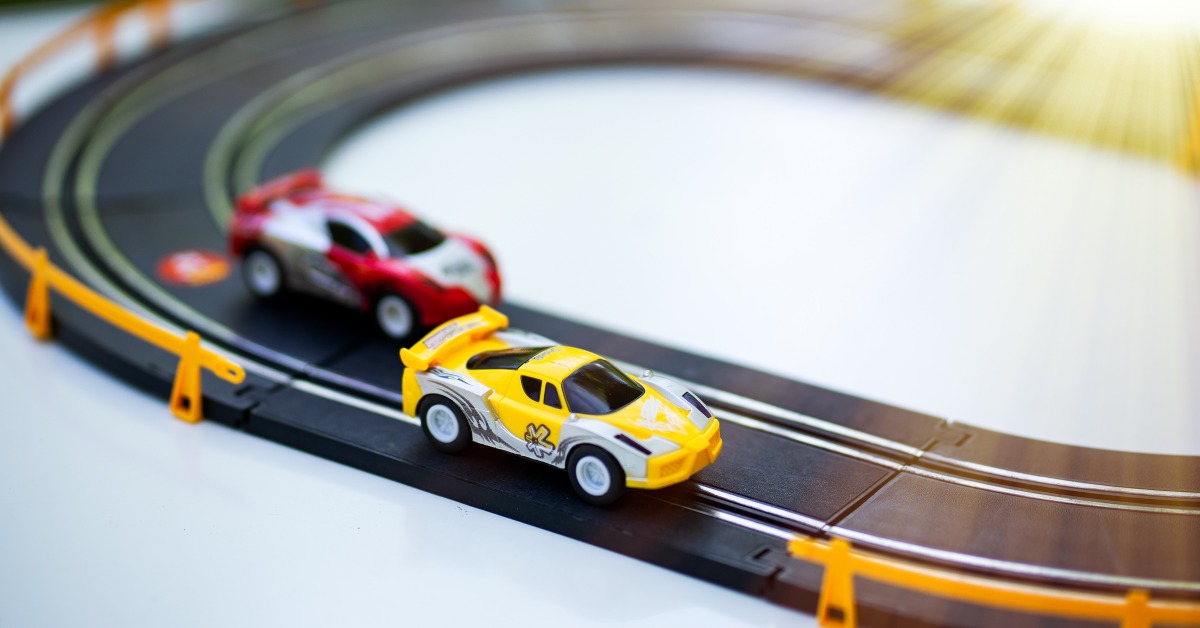
Many beginners assume an oval layout lacks excitement. In reality, a thoughtfully designed oval can provide challenging racing when paired with technical elements.
Add tighter curves, chicanes, and varying straight lengths to increase complexity. Small adjustments create multiple passing opportunities and demand greater driver control.
This approach works particularly well in apartments, spare rooms, and shared recreational spaces.
Use an L-Shaped Layout
Corners often become wasted space in a room. An L-shaped layout takes advantage of those areas while creating a more interesting driving experience.
One side can feature longer straights for speed, while the other side focuses on technical cornering sections. This combination creates variety without requiring additional square footage.
An L-shaped design also allows spectators to view multiple sections of the track from different angles.
Design Around the Walls
Many hobbyists focus on the center of a room. Wall-mounted and perimeter layouts offer a smarter solution when space remains limited.
Running the track around the room's perimeter preserves valuable floor space while creating longer lap distances. Shelving brackets, custom tables, and narrow platforms support elevated sections along the walls.
This design creates the feeling of a larger circuit while maintaining a small footprint.
Add Elevation Changes for Greater Variety
Elevation creates visual interest and improves racing dynamics without increasing the layout size.
A simple overpass can transform an ordinary design into a realistic racing circuit. Gentle climbs and descents also challenge drivers by altering vehicle handling characteristics.
When adding elevation, maintain smooth transitions and stable support structures. Sharp grades can reduce performance and increase the chance of accidents.
Even a few inches of height variation can make a compact layout feel significantly larger.
Build a Foldaway Layout
Some enthusiasts cannot dedicate permanent space to a track. Foldaway layouts provide an excellent solution.
A foldable table allows the track to remain assembled while staying out of the way when not in use. Hinged platforms can fold against a wall or store vertically in a garage.
This approach protects the track from damage and reduces setup time before racing sessions.
Many hobbyists enjoy full-featured layouts despite having no permanent racing room.
Consider a Multi-Level Design
A multi-level layout uses vertical space instead of additional floor space.
By incorporating bridges, elevated straights, and layered track sections, builders can increase track length while maintaining a compact footprint.
Successful multi-level designs focus on smooth traffic flow. Drivers should easily follow cars through every section without losing visibility.
Good lighting becomes especially important when multiple track levels overlap.
Use Modular Sections
A modular layout consists of interchangeable track segments that can change over time.
This strategy offers several benefits. Builders can experiment with different configurations without purchasing an entirely new track system. Individual sections can also store more easily when space becomes limited.
Modular construction keeps the hobby fresh and allows layouts to evolve alongside racing preferences.
Even a small collection of extra track pieces can create numerous unique configurations.
Incorporate Scenic Elements Carefully
Scenery adds realism but can consume valuable space if used excessively.
Compact layouts benefit from selective scenery placement. Small grandstands, barriers, pit lanes, and trackside buildings create visual interest without overwhelming the racing surface.
Focus on quality rather than quantity. A few well-placed details often look more realistic than crowded scenery.
Thoughtful decoration helps create the illusion of a larger racing environment.
Make Use of Underutilized Areas
Many homes contain overlooked spaces that work surprisingly well for slot car layouts.
Examples include:
- Basement corners
- Garage workbench areas
- Finished attic sections
- Home office corners
- Spare bedroom walls
- Recreation room perimeters
Evaluating these areas often reveals opportunities that hobbyists initially overlook.
Creative placement can unlock enough room for a highly satisfying layout.
Optimize Track Flow Instead of Track Length
A common mistake involves focusing exclusively on maximum lap length.
Track flow matters more than total distance. Drivers remember exciting corners, strategic passing zones, and smooth transitions between sections. They rarely remember the exact lap length.
A compact layout with excellent flow often provides a better racing experience than a larger track with repetitive sections.
Every track piece should contribute to the overall racing experience.
Choose the Right Scale for Your Space
Scale selection significantly affects layout possibilities.
1:43 scale systems typically fit the smallest spaces and suit beginners or families. Many hobbyists choose 1:32 scale systems because they balance realism and space efficiency. Larger 1:24 scale vehicles provide impressive detail but require wider curves and additional room.
Understanding available space before selecting a scale helps prevent future limitations.
The right scale allows builders to maximize creativity while maintaining comfortable racing conditions.
Lighting Can Make a Small Layout Feel Bigger
Lighting influences the perception of space more than many hobbyists realize.
Well-placed LED lighting highlights track features, enhances scenery, and improves visibility during races. Under-bridge lighting and illuminated pit areas add depth and realism.
Proper lighting also draws attention to key design elements, making the layout appear more sophisticated and expansive.
A carefully illuminated compact track can rival the visual appeal of much larger installations.
Getting Started
Limited space should never discourage anyone from building an impressive slot car layout. Smart planning, creative design, and efficient use of available space allow hobbyists to create exciting circuits in surprisingly small areas.
Compact layouts often deliver some of the most engaging racing experiences because they emphasize strategy, technical driving, and thoughtful design. By focusing on track flow, elevation changes, modular construction, and creative room utilization, enthusiasts can build layouts that feel much larger than their physical footprint.
With the right approach, even a modest space can become a dynamic racing environment that provides years of enjoyment.